This is a straightforward investment thesis. It is based on publicly verifiable infrastructure data, historical SPR price appreciation, and the economics of what happens when a major employment hub and premium transit infrastructure converge on the same corridor. We present the case — and the honest risks — and you draw your own conclusions.
Southern Peripheral Road (SPR) — the 16-kilometre corridor connecting Golf Course Extension Road to NH-48 in Gurgaon — has delivered approximately 125% property value appreciation over the five-year period from 2021 to 2026. This is among the strongest appreciation trajectories of any residential corridor in the Delhi-NCR region over the same period.
The appreciation has not been uniform across the corridor. The strongest gains have been concentrated in Sectors 76–78 (the DLF Phase VI zone) where luxury developer presence has been highest and infrastructure investment most concentrated. Sectors 79–80 have appreciated more modestly.
| Corridor / Zone | 2021 Approx Price | 2026 Approx Price | Appreciation | Driver |
| Sector 76-77 (DLF Phase VI) | ₹7,000–9,000 per sq ft | ₹14,000–22,000 per sq ft | ~125% | DLF Privana launch, SPR infrastructure, premium developer entry |
| Sector 80 (Golf zone) | ₹6,000–8,000 per sq ft | ₹10,000–18,000 per sq ft | ~80–100% | Golf adjacency, Ashiana/Eldeco presence |
| Golf Course Extension Road (established) | ₹10,000–14,000 per sq ft | ₹16,000–24,000 per sq ft | ~60–70% | Established address, limited new supply |
| Dwarka Expressway (comparable corridor) | ₹5,000–7,000 per sq ft | ₹10,000–16,000 per sq ft | ~80–100% | Metro completion, improved road access |
SPR’s acceleration from 2024 onwards reflects a specific inflection point: DLF’s Privana launch at ₹22,000+ per sq ft established a new price ceiling for the zone that pulled comparable luxury projects upward.
The Gurgaon Metro extension serving the SPR corridor has been confirmed and construction has begun in 2026. The 30.5 km Phase 1 route connects Millennium City Centre to Basai with a spur to Dwarka Expressway. This directly serves the corridor where Sectors 76–80 are located.
Historical metro impact in Gurgaon: the original Rapid Metro (Phase 1, 2013) drove 20–30% property value appreciation in directly adjacent sectors within 2–3 years of operational commencement. A broader-coverage metro serving the SPR belt is expected to produce a comparable appreciation premium.
DLF Cyber City 2, planned for Sectors 74A–75A adjacent to the SPR belt, will create a new large-scale commercial employment hub comparable in scale to the original Cyber City in Sector 25. When the employment hub within the city is located, property values in the nearest residential zones follow.
Current commute from Sector 77 to DLF Cyber City 1: approximately 20–25 minutes. When Cyber City 2 is operational in Sectors 74A–75A, this commute will effectively become 5–10 minutes for SPR corridor residents. The residential demand this creates is structurally significant.
DLF’s planned Mall of India on SPR — planned to be one of India’s largest retail destinations — will transform the daily lifestyle infrastructure available to Sector 76–80 residents. Premium retail, food, entertainment, and anchor retail stores within 10 minutes of Sector 77 will change the perceived livability of this address.
The parallel in Gurgaon: DLF Mega Mall/Ambience Mall’s opening adjacent to Golf Course Road in 2007–2010 directly accelerated premium property demand in Sectors 26–28, 42–44. A comparable mall on SPR will produce a comparable demand signal.
The GMDA SPR elevated corridor — in tender stage as of 2026 — will significantly reduce peak-hour commute times on SPR. For residents of Sectors 76–80 commuting to NH-48, Golf Course Extension Road, or Dwarka Expressway, this translates to 15–25 minutes of saved commute time daily each way.
Property investors consistently value commute time savings at approximately ₹500–1,000 per sq ft premium in the Gurgaon market. An elevated corridor that reduces SPR peak-hour times from 35–40 minutes to 15–20 minutes is a ₹500+ per sq ft event.
The Rapid Rail Transit System (RRTS) from New Delhi to Alwar — via Dhaula Kuan, IGI Airport, and Gurgaon’s Cyber Hub — is under active development. A proposed station at Kherki Dhaula, approximately 1 km from Southern Peripheral Road, would connect Sector 77 residents directly to Delhi in under 30 minutes. This is the single most transformative connectivity catalyst for the SPR belt if confirmed.
NOTE: The Kherki Dhaula RRTS station is proposed. It has not been formally confirmed with an announced opening date. Investors should treat this as an upside catalyst if confirmed, not a guaranteed investment thesis.
Investment theses that include only the upside are not investment theses — they are sales pitches. Here are the genuine risks for Sector 76–80 SPR investors in 2026.
| Risk | Probability / Impact | Mitigation |
| Infrastructure delays: metro, Cyber City 2, RRTS may take longer than projected | Medium probability — Indian infrastructure projects routinely face 2-4 year delays | Buy for 2030-2035 horizon, not 2029. Price in delay. SPR has appreciated strongly even without confirmed infrastructure completion. |
| Oversupply: DLF Privana (3,000+ units) plus multiple other projects entering simultaneously | Medium — all projects targeting 2029-2034 possession | Quality projects with genuine wellness credentials, RERA compliance, and strong developer track records will outperform in an oversupply scenario |
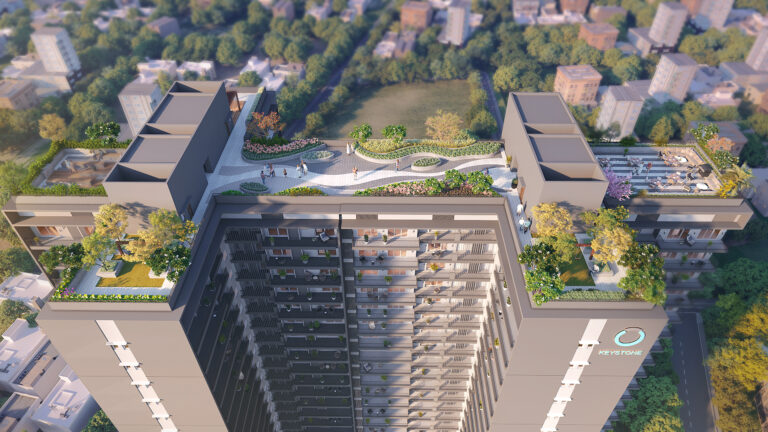
| DLF Privana resale supply: 3,000+ ultra-luxury units entering resale market post-2034 | Medium for the Rs 22,000+ segment, lower for the Rs 14,000 segment | Keystone Seasons is in a different price-density segment — less directly exposed to Privana resale pressure |
| Economic slowdown reducing luxury demand | Low-medium — luxury Gurgaon has proven resilient through 2020-2022 COVID period | RERA-registered projects with strong developer track records protect capital better than unregistered projects |
The SPR Sector 76–80 corridor has five simultaneous infrastructure catalysts converging between 2026 and 2030. This combination — metro, major employment hub, premium retail destination, elevated commute infrastructure, and potential RRTS connectivity — is structurally more concentrated than any other Gurgaon corridor in the same period.
For investors buying in Sector 77 in 2026, the question is not whether infrastructure will arrive — it is which project within the zone will benefit most from the appreciation it generates. Projects with IGBC Gold certification, RERA compliance, low density, and wellness credentials will command the strongest premium when this corridor matures.
The comparable precedent: buyers who entered Golf Course Extension Road in 2010–2012 — before the Rapid Metro, before South Point Mall, before the social infrastructure maturation — captured 200–300% appreciation over 8 years. The structural conditions on SPR in 2026 are comparable to Golf Course Extension Road in 2011.